Collection №16 — Updated 9 August 2026
The 6 best customer support tools in 2026
Support tooling splits on where the conversation starts. A shared inbox tool like Help Scout organises the email you already get; chat-first tools like Crisp and Tawk.to put a widget on your site so questions arrive while the visitor is still there. Most products here now stretch to cover both, so choose by which side they grew from and how much platform you want around the messages.
Help Scout
★ Best overallTurns support@ into an inbox the whole team can work
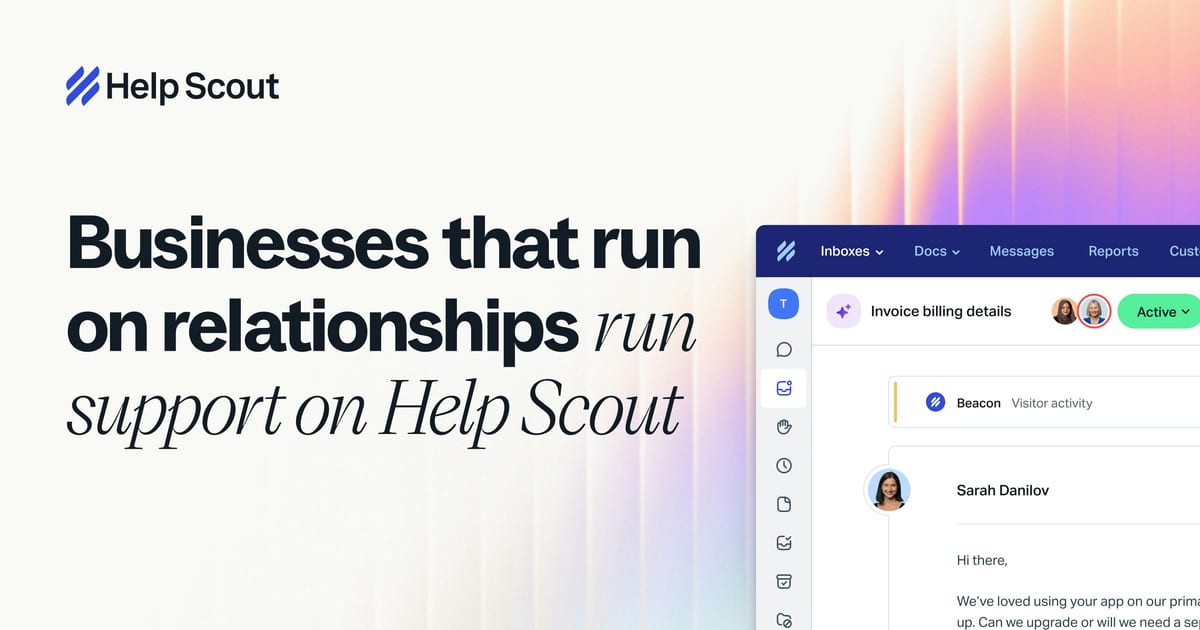
Support lands in a queue the whole team can see, with assignments, private notes, and collision detection that shows when a teammate is already replying. Replies arrive as ordinary email, with no ticket numbers or portals. Docs and a chat widget are there when you outgrow plain email.
Visit Help ScoutCrisp
Best all-in-oneLive chat, shared inbox, and knowledge base in one app
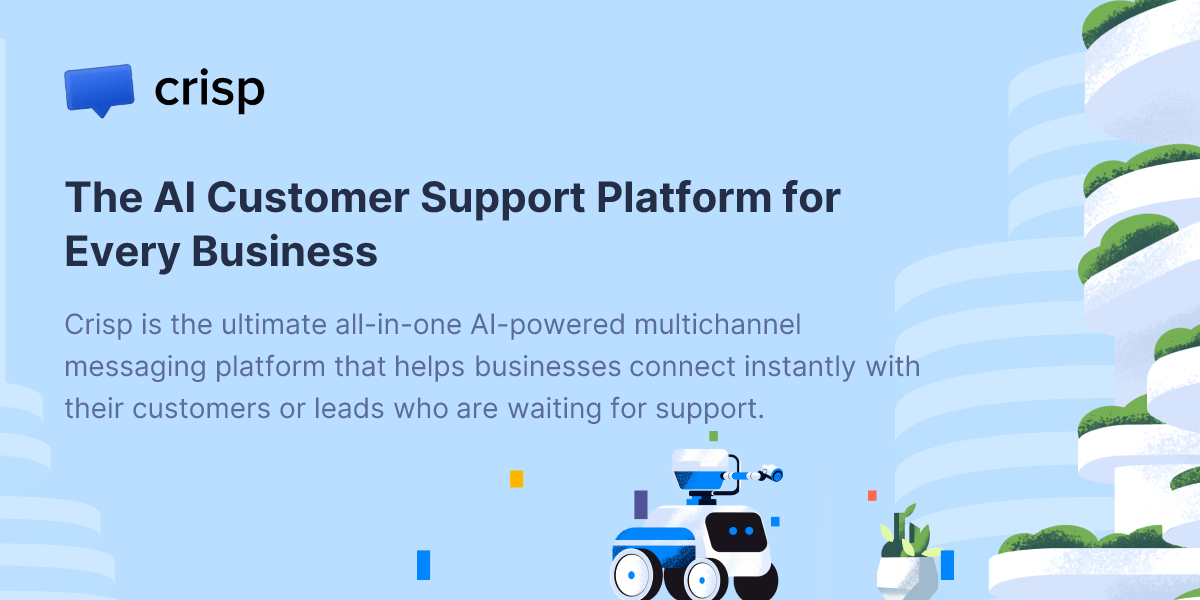
One app covers the chat widget, the shared inbox behind it, a chatbot builder, and a knowledge base. The free plan is enough to put live chat on a site this afternoon. For a small team that wants everything in one product, it is the strongest starting point.
Visit CrispTawk.to
Best free live chatLive chat that costs nothing, funded by optional add-ons
The widget, the dashboard, and unlimited agents cost nothing. The company makes its money on add-ons, such as removing the branding or hiring its trained agents to answer for you. It looks dated next to Crisp, but as a free chat box on a site it is hard to beat.
Visit Tawk.toChatwoot
Best open sourceOpen-source support desk you can run on your own servers
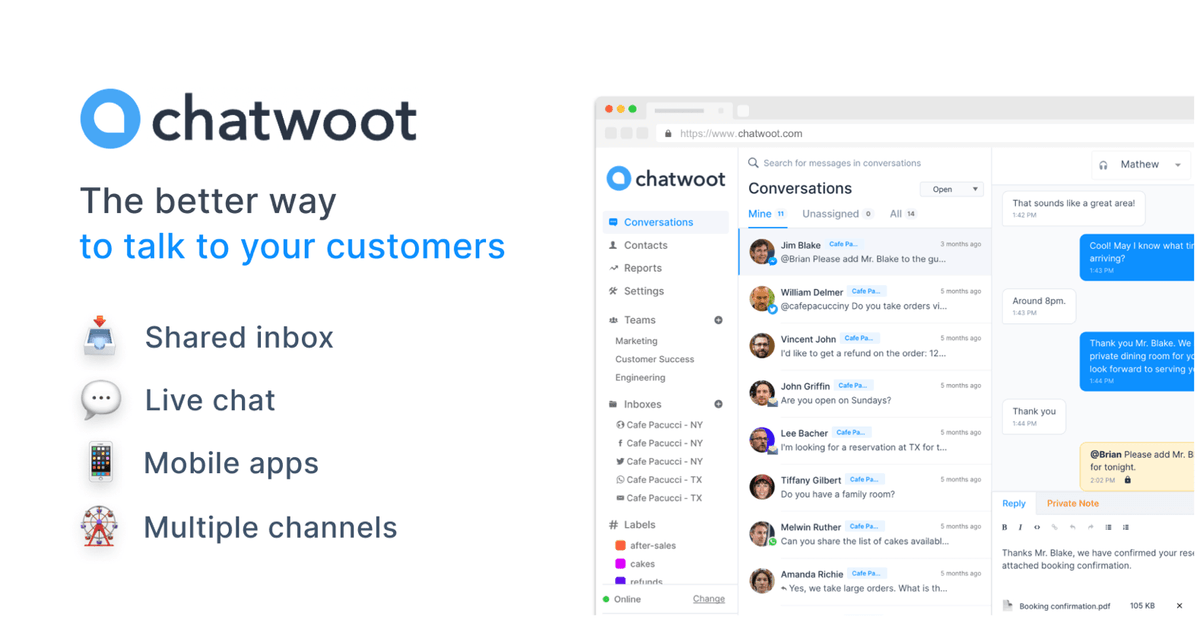
An open-source support desk you can self-host, pulling live chat, email, WhatsApp, and social messages into one inbox. There is a hosted version when you would rather not operate it yourself. If customer data has to stay on your infrastructure, start here.
Visit ChatwootPlain
Best for B2B SaaSSupport for B2B teams whose customers write in Slack
Built for B2B software companies, where support arrives through shared Slack channels and email instead of a widget on a marketing page. Conversations are tied to accounts, and engineering issues hand off to tools like Linear. If your customers are other companies with their own engineers, it will match how they already talk to you.
Visit PlainIntercom
Best AI agentThe incumbent platform, with Fin answering questions up front

The biggest product here: messenger, help center, inbox, and Fin, the AI agent that answers a share of questions from your docs before a human sees them. It is built for teams with real volume and a support budget. Start elsewhere, and come back when the queue outgrows your inbox.
Visit IntercomFrequently asked questions
What is the best free customer support tool?
Tawk.to is the standout for live chat: nothing about the core product costs money, with no cap on agents, and the company earns its money on optional add-ons instead. Crisp's free plan covers live chat and a basic shared inbox for a small team. Chatwoot is free as well if you are willing to host it on your own servers.
Do I need a help desk or is a shared inbox enough?
For most early-stage teams a shared inbox is enough. Help Scout adds assignments, private notes, and a searchable history on top of ordinary email, which covers what a help desk means at small scale. Move to a bigger platform like Intercom once volume is high enough to need automation and reporting.
What is a good alternative to Intercom for a small startup?
Chatwoot is the usual open-source answer: live chat, a shared inbox, and social channels in one product, free when self-hosted and available as a hosted service when you would rather not run it. Crisp covers similar ground as a hosted app with a free plan. Both do the parts of Intercom a small team needs.