Collection №17 — Updated 9 August 2026
The 5 best CRMs for startups in 2026
Most founders arrive here with a spreadsheet that stopped working. The first decision is what that spreadsheet was tracking: deals moving through stages points to a pipeline tool, while a list of people and conversations points to a contact workspace. The second is how much product you want around the CRM, because one of these five grows into marketing and support software and the other four stay focused.
Attio
★ Best overallA flexible CRM that assembles itself from your email history

Connect your email and calendar and it builds the contact list itself, with past conversations attached to each record. The data model bends to whatever you sell, so a startup tracking users and workspaces is not stuck with someone else's deal fields. It is fast, and the free plan covers a founding team.
Visit AttioHubSpot
Best free planThe free-plan incumbent that grows into a full platform

The free plan covers contact management, deals, and email tracking with no time limit, and plenty of startups begin here for that reason. Marketing and support tools bolt on later without a migration. Paid tiers climb steeply once you need them, so read the pricing page before you settle in.
Visit HubSpotPipedrive
Best pure sales pipelineA visual sales pipeline that pushes the next follow-up
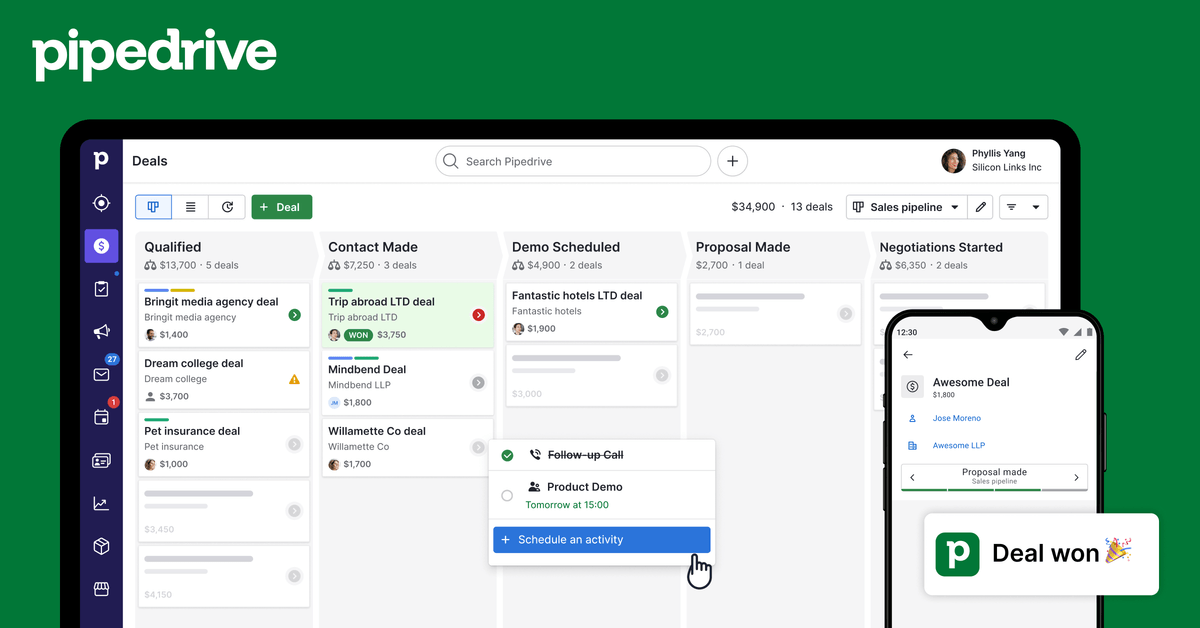
Built around one pipeline view: deals move left to right, and each one is supposed to carry a scheduled next activity. Salespeople take to it without training. If deals in your spreadsheet went quiet because nobody owned the follow-up, this fixes that, and it stays a sales tool without sprawling into a platform.
Visit Pipedrivefolk
Best for relationship workA light contact-first CRM for fundraising and outreach
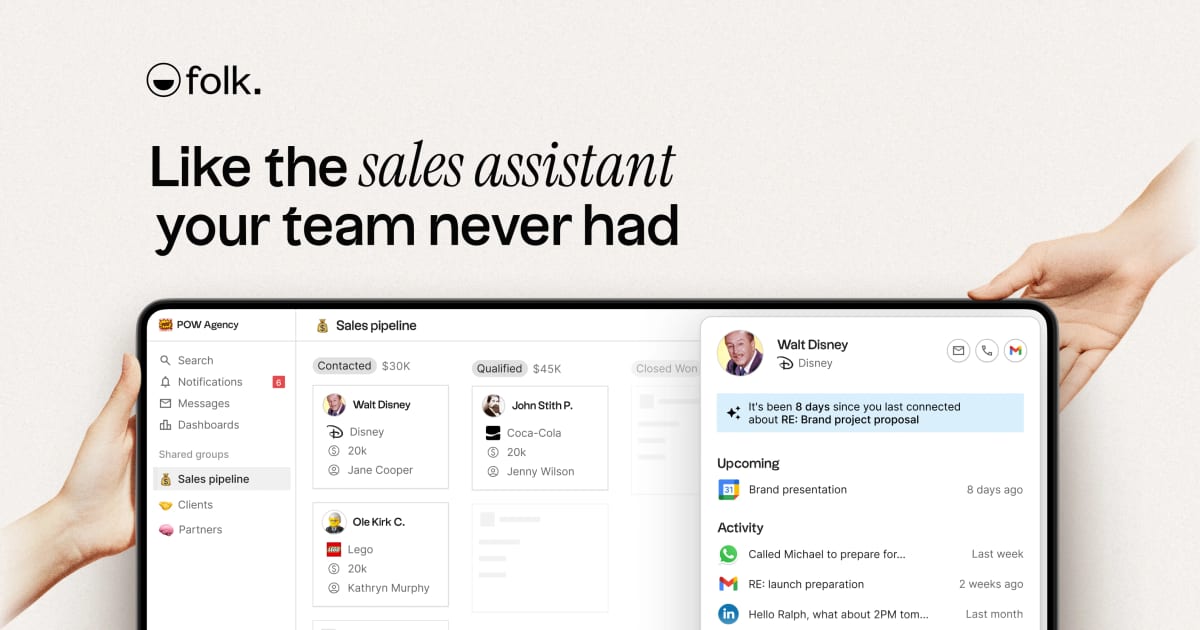
folk starts from contacts instead of deals. A browser extension pulls people in from LinkedIn or Gmail, and groups with mail merge handle early outreach. Pick it for fundraising or agency work, where you are keeping dozens of relationships warm rather than closing deals.
Visit folkTwenty
Best open sourceThe open-source CRM you can self-host and modify
The open-source option. The interface looks more like Attio than the enterprise software it wants to replace, and you can host it yourself, so customer data stays on your servers. It is younger than the rest of this list and you handle your own upkeep, but you get the source code.
Visit TwentyFrequently asked questions
What is the best free CRM for a startup?
HubSpot's free plan is the most complete of the five, and it never expires. Attio also has a free plan sized for a founding team, with a faster and more flexible product behind it. Twenty is free in a different way: the software is open source and you run it on your own servers.
Should a startup use Attio or HubSpot?
Attio if you want a fast CRM that molds to your own data and stays out of the way. HubSpot if you expect to want marketing and support tooling from the same vendor within a year or two, and you accept the price climb that comes with that. Both have free plans, so trying each with real leads costs nothing.
When should a startup switch from a spreadsheet to a CRM?
When follow-ups start slipping, which usually happens somewhere past a few dozen active conversations. A CRM earns its keep by syncing email, so tools like Attio and folk attach the history to each contact automatically, and Pipedrive prompts a scheduled next step on every deal.